Crowd, Belonging, and National Experience in the 2026 FIFA World Cup
Bank and Finance publishes this new essay in both English and Spanish as part of its work on Mexico in the global context.
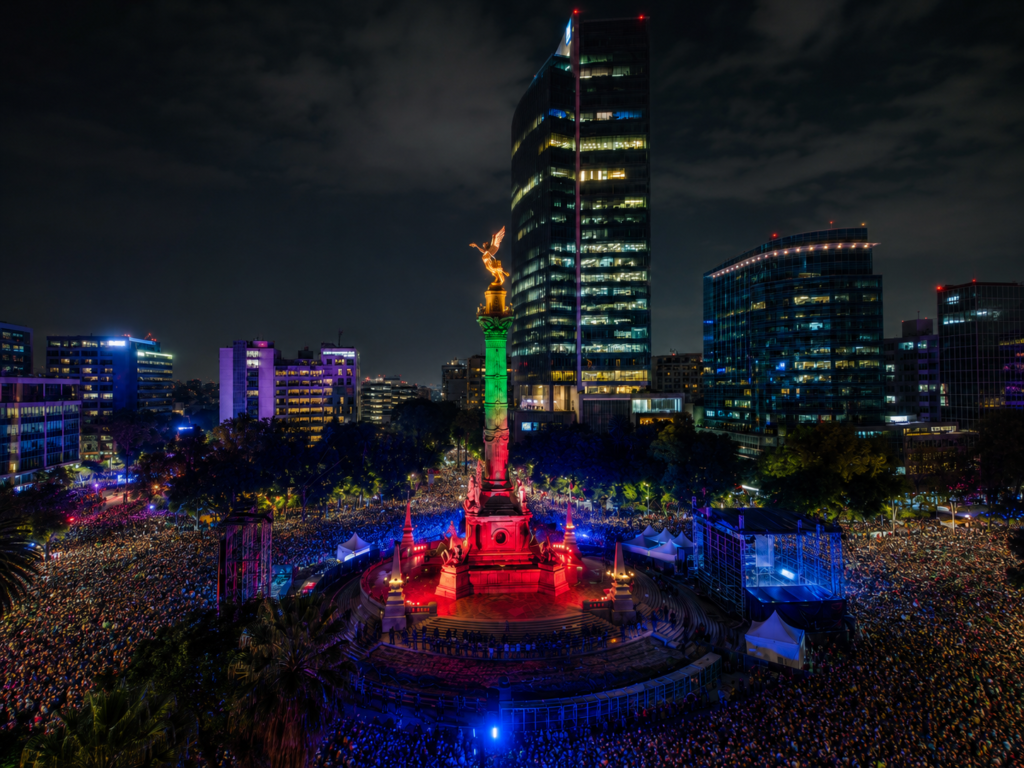
The 2026 FIFA World Cup offers a singular opportunity to observe social phenomena that normally remain dispersed or only partially visible. For a few weeks, millions of people concentrate their attention on the same events, share emotions around national symbols, and physically occupy plazas, avenues, stadiums, and public spaces.
This essay is not a study of football as a sport. It uses World Cup celebrations as a social laboratory to examine three fundamental dimensions of contemporary life: crowd, belonging, and national experience.
Drawing on Elias Canetti, Émile Durkheim, Victor Turner, José Ortega y Gasset, Max Weber, Benedict Anderson, Anthony D. Smith, and Eric Hobsbawm, the essay explores how normally separate individuals can temporarily become a collectivity; why deeply individualized societies continue to seek shared experiences; and how a national community composed of millions of strangers can become visible to itself.
The central argument is that World Cup celebrations do not create the nation or invent belonging. Rather, they allow a normally dispersed community to acquire, for a few hours, a visible, audible, and shared presence.
The essay is available in both languages:
English
The Nation Made Visible: Crowd, Belonging, and National Experience in the 2026 FIFA World Cup
Spanish
La nación se vuelve visible: Multitud, pertenencia y experiencia nacional en la Copa Mundial de 2026